Vaccinations protect everyone—from babies to older adults. Scroll down for important information on adult immunisations.
Vaccinations not only protect you and your children but also help prevent the spread of disease in the community, safeguarding vulnerable people who cannot be vaccinated.
Important for Families Moving from Overseas
If you have recently moved to the UK from another country, please make sure you provide us with a copy of your child’s vaccination history, as countries follow a slightly different pattern of vaccination and our nurses will follow the UK schedule. This helps us check which vaccines your child has already received and identify any that may be due according to the UK schedule. Without this information, we may need to start the vaccination programme from the beginning to ensure your child is fully protected.
If you do not have a record, please contact your previous healthcare provider or local health authority to request a copy. You can email or bring the documents to the practice before your child’s appointment.
Reminders
Our practice fully supports vaccination. Our nurse immunisers have a responsibility to check in with parents who have chosen not to vaccinate. We simply need a clear “yes” or “no” from you and will continue to provide gentle reminders until we receive your consent or your decision to decline. This is not intended to pressure you, but to understand your wishes and ensure you are offered every opportunity to protect your child.
Baby’s First Immunisations and Health Check
When your baby is born, we are notified and add them to our waiting list for their first appointments. Around the time your baby approaches eight weeks old, we will contact you to arrange a combined visit. This appointment is designed to make things as convenient as possible for you and your baby.
First, mum will see a doctor for a postnatal check to ensure your recovery is going well. Next, your baby will have their eight-week health check with the doctor. This includes a full examination to make sure your baby is developing as expected. After this, your baby will go straight to the nurse for their first set of immunisations.
We aim to schedule these appointments back-to-back so you can complete everything in one visit. Occasionally, this may not be possible due to clinic timings, but we will always try to make the process as smooth as we can.
Children's Immunisations
What to Expect During Your Child’s Vaccination Appointment
We recommend dressing your child in loose clothing to make the vaccinations process easier. During your appointment, the nurse will explain which vaccines your child is due to receive and answer any questions you may have. For babies and young children, you will usually be asked to hold them securely on your lap during the injection. Most vaccines are given in the thigh or upper arm, and the process only takes a few seconds. If your child is receiving an oral vaccine, such as rotavirus, this will be given as a small liquid on a spoon or syringe.
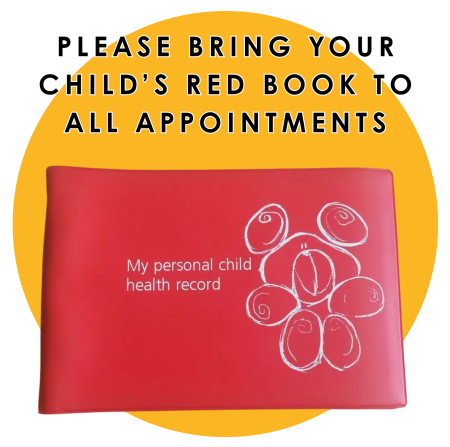
After the vaccination, the nurse will advise you about possible side effects and what to do if your child develops a fever or soreness at the injection site. For certain vaccines, such as meningitis B, you may be advised to give paracetamol soon after the appointment to reduce the risk of fever. You will also be reminded when the next vaccination is due and asked to bring your child’s Red Book so we can record the details.
Appointments usually take around 10–15 minutes, and most children cope very well. If you have any concerns or need extra time, please let us know when booking so we can support you.
Support
We understand that parents often have questions or concerns about vaccinations, and it is completely normal to want reassurance. Our nurses and GPs are here to provide clear, reliable advice and answer any queries you may have before, during, or after your child’s appointment. If you would like to speak to someone directly, please contact the practice—we are always happy to help.
For quick answers, see the section below where we address some of the most common questions parents ask about childhood vaccinations. These include safety, side effects, and what to do if your child is unwell or misses an appointment.
Common Questions from Parents/Guardians
Yes. All vaccines used in the UK are thoroughly tested before being introduced and are continually monitored for safety. Serious side effects are extremely rare, and the risks of not vaccinating are far greater. Research has also shown there is no link between the MMR vaccine and autism.
Babies are most vulnerable to serious infections, so early protection is vital. The schedule is designed to give immunity at the age when each vaccine works best. Some vaccines require multiple doses to build strong, long-lasting protection.
Yes. Combined or multiple vaccines do not overload a child’s immune system. Babies are exposed to thousands of germs daily, and vaccines use only a tiny fraction of their immune capacity. Giving vaccines together is safe and reduces the number of appointments
If your child has a minor illness without a fever, such as a cold, they can still be vaccinated. If they have a fever or are seriously unwell, the appointment may be postponed until they recover.
Most side effects are mild and short-lived, such as a sore arm, slight fever, or fussiness. For meningitis B vaccines, giving paracetamol soon after the appointment can help reduce fever. Serious reactions are extremely rare.
No UK vaccines contain mercury-based preservatives. Some vaccines include tiny amounts of aluminium to boost immune response, but this is less than what babies ingest naturally from formula milk.
No. Large-scale studies have found no link between vaccines and autism or other developmental disorders. The real risk comes from not vaccinating, as diseases like measles can cause severe complications.
If you miss a vaccination, contact the practice to rebook by calling us on 01522 699999 or contact us via Accurx. Your child can continue the schedule without starting over, except for rotavirus, which has strict age limits.
Adult Immunisations
Vaccinations are not just for children—adults also need protection against certain illnesses as they age or if they have specific health conditions. The NHS offers a range of vaccines for adults to help prevent serious infections and maintain good health.
Why Adult Vaccinations Matter
As we get older, our immune system becomes less effective, making us more vulnerable to infections such as flu, pneumonia, and shingles. Vaccines reduce the risk of these illnesses and their complications, which can be severe in later life. They also help protect those around you, including family members and people with weakened immunity.
Routine Adult Vaccines
- Flu Vaccine: Offered every year to everyone aged 65 and over, and to adults with certain health conditions or who are pregnant.
- Pneumococcal Vaccine: Protects against pneumonia, meningitis, and sepsis. Usually given once at age 65, or earlier for those at higher risk.
- Shingles Vaccine: Offered when you turn 65, and again for anyone aged 70–79 who missed it. From September 2023, the Shingrix vaccine is used for better protection.
- RSV Vaccine: Introduced in 2024, offered at age 75 to protect against respiratory syncytial virus, which can cause severe illness in older adults.
- COVID-19 Booster: Usually offered in spring and winter to adults aged 75 and over and those with weakened immunity.
Vaccines for Pregnant Women
Pregnant women are advised to have the flu vaccine during flu season and the whooping cough (pertussis) vaccine from 28 weeks of pregnancy. From 2024, an RSV vaccine is also offered during pregnancy to protect both mother and baby.
Catch-Up Vaccinations
If you missed vaccines earlier in life—such as MMR, HPV, or MenACWY—you may still be eligible for a catch-up dose. This is especially important for people starting college or university, or those who have moved to the UK from overseas. Please speak to us if you are unsure about your vaccination history.
Booking and Further Information
If you think you or your child are due a vaccine or have received an invitation, please contact the practice to book an appointment by calling 01522 699999 or by sending us a request on Accurx. You can also visit the NHS Vaccinations page for more detailed information.