
NHS Screening Programmes
Screening is a key part of preventive healthcare. It helps detect early signs of certain conditions before symptoms appear, allowing for earlier treatment and better outcomes. The NHS offers several national screening programmes designed to identify health issues at an early stage.
Attending your screening appointments is one of the most effective ways to protect your health. Most tests are quick, straightforward, and can offer peace of mind. If you have missed an invitation or are unsure whether you are eligible, contact your GP surgery for advice.
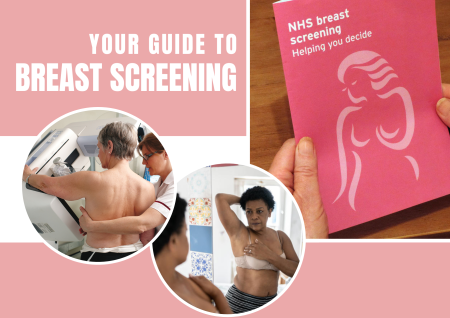
Breast screening is offered to women and people assigned female at birth aged 50 to 71. Invitations are sent every three years. The screening involves a mammogram, which is a low-dose X-ray of the breasts. This test can detect breast cancer early, often before it can be felt. Attending your screening appointment increases the chances of successful treatment. If you don’t attend, you may miss the opportunity to catch cancer early when it’s most treatable.
Click on the image shown for 'Your guide to NHS breast screening'
Bowel cancer screening is available to people aged 54 to 74, and is gradually expanding to include those aged 50 to 74. Every two years, eligible individuals receive a home test kit known as the FIT test, which checks for hidden blood in your stool. Bowel cancer is one of the most common cancers, but it’s highly treatable when caught early. Not completing the test could mean missing early warning signs.
Abdominal aortic aneurysm (AAA) screening is offered to all men in England during the year they turn 65. This involves a quick, painless ultrasound scan of the abdomen to check for a swelling in the aorta, the main blood vessel in the body. If left untreated, an aneurysm can burst and be life-threatening. Screening helps detect this condition early, when it can be monitored or treated. Missing this appointment could mean not knowing you have a potentially serious condition.
Cervical screening is available to women and people with a cervix aged 25 to 64.
From 1 July 2025, the routine cervical screening interval has changed for some age groups:
- Ages 25 to 49: If you test negative for high-risk HPV (hrHPV), you will now be invited for screening every 5 years instead of every 3 years. Research shows that if you test negative for hrHPV, your risk of developing cervical cancer is very low for many years.
- Ages 50 to 64: There is no change — you will continue to be invited every 5 years.
The cervical screening test involves a simple swab to check for high-risk types of human papillomavirus (HPV), which can lead to cervical cancer. Detecting HPV early allows for monitoring or treatment before cancer develops. Skipping this test could mean missing the chance to prevent cancer altogether.
This change is based on strong scientific evidence and has been approved by national health experts. It means fewer tests, with the same level of safety.
If you test positive for HPV, your care will remain the same. You may be invited back in 1 year or referred for further checks if needed. You will only move to the 5-year interval once it is safe to do so.
Your next screening invite will still be based on the date of your last test.
If you are due for screening, please contact the practice to book your appointment. Our team is here to help if you have any questions.